

Chimney Cap Problems in Far Rockaway and Hewlett: What’s Actually Wrong and How It Gets Fixed
A chimney cap may look like a small component, but it plays an important role in protecting the chimney from rain, animals, debris, and other outdoor exposure. When the cap is missing, damaged, improperly fitted, or obstructed, problems can develop inside the chimney before a homeowner notices anything from the ground.
For homeowners in Far Rockaway, Hewlett, and nearby Queens and Nassau County communities, understanding the warning signs can help identify problems before they become more extensive. A damaged cap does not necessarily mean the chimney needs major repairs, but it does deserve a proper evaluation.
Problem 1: Water Getting Into the Chimney
What you may notice: Rust around the fireplace or damper, water stains, deteriorated masonry, or a damp or unusual odor.
Why it happens: A chimney without adequate protection at the top gives rain and snow a direct path into the flue and masonry. CSIA explains that water entering a chimney can contribute to deterioration of mortar, brick, dampers, and other components. Freeze-thaw cycles can make moisture-related masonry damage worse. (CSIA homeowner guide)
A cap is not the only possible source of chimney water intrusion. Flashing, the crown, cracks in masonry, and other components can also allow water to enter.
The professional fix: A chimney professional should first determine where the water is entering. If the cap is damaged or missing, it may need to be repaired or replaced. If the crown or flashing is also compromised, those components may require separate repairs.
New York’s current residential code includes requirements for masonry chimney caps, including a cap designed to shed water and a bond break around flue liners. (New York State Department of State)
Can it be prevented? Regular inspection can identify damaged caps, masonry, flashing, and other potential water-entry points before deterioration becomes extensive.
Problem 2: Animals Getting Through Damaged Screening
What you may notice: Scratching, chirping, nesting material, debris in the fireplace, or other evidence that an animal has entered the chimney.
Why it happens: A damaged cap or deteriorated screen can create an opening for birds or animals.
CSIA specifically recommends chimney caps as a way to help keep animals, birds, leaves, and other debris out of the chimney. Animal nests can also obstruct the flue and create a potential fire or venting problem. (CSIA)
The professional fix: The first step is determining whether an animal or active nest is present. Wildlife removal may need to be handled separately by an appropriately qualified wildlife professional.
Once the chimney is clear and it is safe to proceed, the damaged cap or screening can be repaired or replaced.
The replacement should be appropriate for the chimney and appliance. Screen dimensions and construction requirements can vary according to the installation and applicable code.
Can it be prevented? A properly fitted cap with suitable screening can reduce the chance of animal intrusion. Annual chimney inspections can also identify nests and deterioration before they become larger problems. (CSIA)
Problem 3: A Cap or Chimney Top Contributing to Draft Problems
What you may notice: Smoke entering the room, poor fireplace draft, or a downdraft when the fireplace is not being used.
Why it happens: Draft problems can have several causes. The cap is only one possible factor.
CSIA notes that chimney caps can help reduce wind-induced downdrafts, but chimney design, flue sizing, appliance characteristics, house pressure, weather, and surrounding structures can also affect draft. (CSIA homeowner guide)
A cap should also not obstruct the flue opening.
CSIA’s Level 2 inspection guidance specifically calls for checking that a rain cap is not obstructed and does not create a restriction at the top of the chimney. (CSIA Level 2 guidance)
The professional fix: The technician should evaluate the entire venting system rather than automatically replacing the cap.
If the cap is restricting the opening or contributing to the draft problem, replacing it with an appropriately designed cap may help. If the cause is elsewhere, additional evaluation may be necessary.
There is no universal “draft cap” that fixes every chimney.
Problem 4: The Cap Has Come Loose or Is Improperly Attached
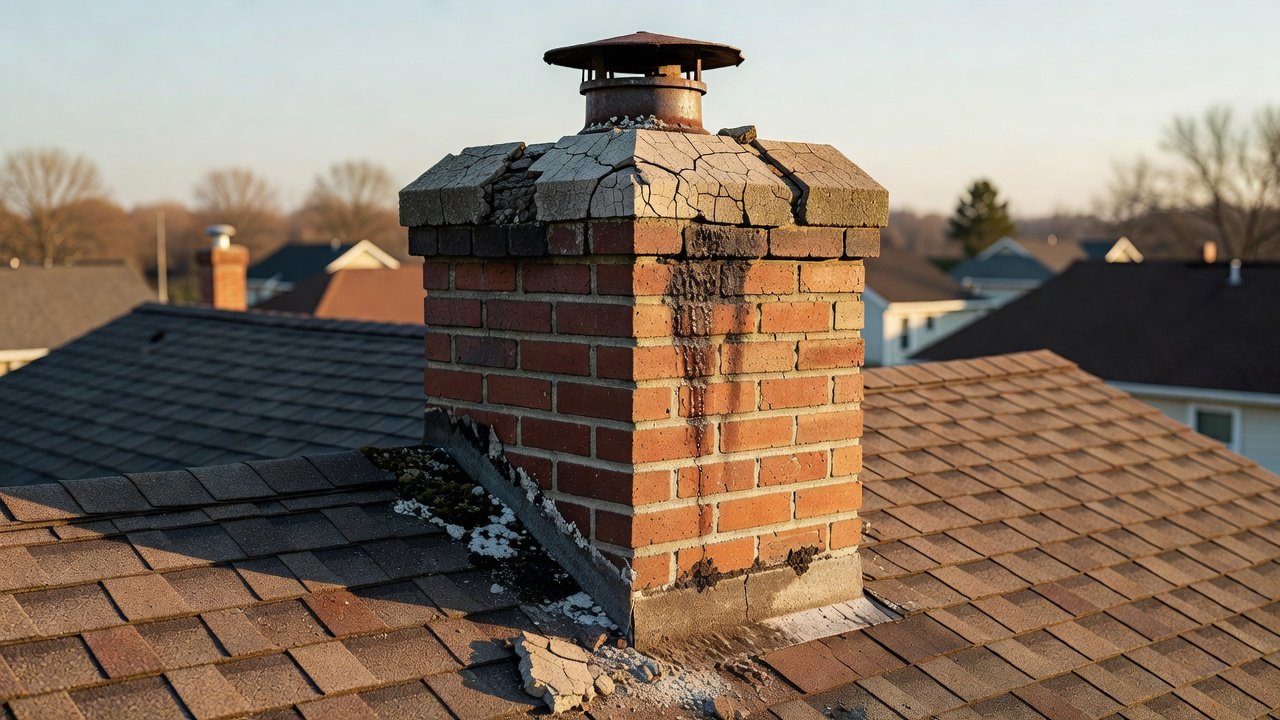
What you may notice: A tilted cap, rattling during windy weather, visible movement, or gaps around the base.
Why it happens: A cap needs to be properly secured to the chimney. Deteriorated masonry, failed fasteners, an unsuitable installation method, or movement of the chimney components can leave the cap unstable.
A loose cap is more than a cosmetic problem. It can expose the chimney to water and create a risk that the cap or its components will become displaced.
The professional fix: The appropriate repair depends on the cap design and condition of the chimney top.
A professional can determine whether the cap can be securely reattached or whether replacement is more appropriate. If the underlying crown or masonry is deteriorated, that problem should be addressed as part of the repair.
New York’s residential code requires masonry chimney caps to include a suitable water-shedding design and a bond break around flue liners. (New York State Department of State)
A simple application of more caulk is not necessarily a proper long-term repair.
Problem 5: The Chimney Has No Cap
What you may notice: An open chimney termination, visible flue opening, animal activity, or water-related deterioration.
Why it happens: Some chimneys were built or modified without the type of termination protection found on newer systems. Existing conditions can also change when caps deteriorate or are removed.
CSIA compares an uncapped chimney to a roof opening because rain, snow, animals, and debris can enter directly into the system. (CSIA homeowner guide)
The professional fix: Before installing a new cap, the chimney should be evaluated to determine what type of termination is appropriate.
For masonry chimneys, New York’s residential code contains specific requirements for chimney caps and rain caps, including minimum net free area requirements. (New York State Department of State)
If the chimney has been exposed to the weather for an extended period, the inspection should also look for masonry deterioration, damaged flue components, and other problems.
A camera inspection may be appropriate when the condition of the flue cannot be adequately evaluated through a less extensive inspection.
Problem 6: The Cap Does Not Match the Chimney or Appliance
What you may notice: An unusual cap configuration, restricted flue opening, multiple appliances connected to the chimney, or uncertainty about which appliance is using which flue.
Why it happens: Chimneys can serve different types of appliances, and a property may have been modified over the years.
A cap should not simply be selected because it fits over the outside dimensions of the chimney. The technician needs to consider the flue configuration, appliance type, termination requirements, and applicable code.
This is particularly important when a home has undergone heating-system changes.
CSIA warns that gas- and oil-burning appliances can present venting problems when existing chimney systems are not appropriately sized or maintained. Damaged liners, soot buildup, debris, and animal nests can also interfere with proper venting. (CSIA)
The professional fix: The chimney professional should identify which appliances are connected to the chimney and evaluate the venting arrangement before recommending a cap.
If an appliance is improperly vented or the flue is obstructed, the cap may be only one part of the problem.
This is also an area where carbon monoxide safety matters. If a chimney or venting system is not functioning properly, combustion gases may not be safely carried outside.
What a Professional Chimney Cap Inspection Should Include
A cap replacement should not be treated as simply measuring the chimney and installing a piece of metal.
The technician should evaluate the cap, chimney top, visible masonry, and surrounding components.
Depending on the chimney and the circumstances, that may include checking:
- Cap condition and attachment
- Rain or snow entry points
- Crown condition
- Flue termination
- Visible masonry deterioration
- Flashing
- Obstructions or animal nests
- Whether the cap restricts the flue
- Whether the chimney is serving the appropriate appliance
A more extensive inspection may be appropriate when the chimney’s condition cannot be adequately evaluated through a basic inspection.
CSIA’s Level 2 inspection guidance specifically includes examination of the chimney top, crown, flashing, flue dimensions, and rain cap, including whether the cap is obstructed or restricts the flue. (CSIA Level 2 guidance)
How Much Does a Chimney Cap Replacement Cost?
There is no reliable single price for chimney cap replacement in Far Rockaway or Hewlett.
The cost can depend on:
- Single-flue versus multi-flue construction
- Cap size and design
- Material
- Chimney accessibility
- Custom fabrication
- Condition of the crown
- Masonry repairs
- Whether wildlife or an obstruction must be addressed
- Whether additional inspection is necessary
A basic replacement can be substantially different from a custom multi-flue installation that also requires masonry repair.
Ask for an itemized estimate that separates the cap itself from any crown, masonry, wildlife, or inspection work.
That makes it easier to understand exactly what you are paying for.
When Should You Replace a Chimney Cap?
Do not wait for the cap to fall apart before having it evaluated.
Visible rust, missing screening, loose components, water intrusion, animal activity, or a visibly displaced cap are all good reasons to arrange an inspection.
CSIA recommends annual chimney inspections, even when a chimney is not used frequently, because animals can build nests and deterioration can occur over time. Cleaning, maintenance, and repairs should be performed when necessary. (CSIA)
For homeowners in Far Rockaway, Hewlett, and surrounding Queens and Nassau County communities, the right repair depends on what the inspection actually finds.
Sometimes the solution is simply a replacement cap.
Sometimes the cap is only the visible symptom of a larger chimney problem.
The important thing is to identify the source before water, animals, or venting problems cause more damage.
Related from Far Rockaway Chimney: Chimney Crown Repair in Far Rockaway, NY · Chimney Repair in Far Rockaway, NY – Restore Safety & Structural I