

What Homeowners in Lawrence Get Wrong About Chimney Inspections
A fireplace can appear to work perfectly while a chimney develops problems that are not obvious from inside the home. That is one reason regular chimney inspections matter.
Homeowners in Lawrence and surrounding Nassau County communities often have questions about when an inspection is necessary, whether a previous cleaning counts as an inspection, and whether a chimney that is rarely used still needs attention.
The answers are not always as simple as they appear. Current CSIA guidance, which follows NFPA 211, recommends that chimneys, fireplaces, and vents be inspected at least once a year for soundness, freedom from deposits, and proper clearances. Cleaning, maintenance, and repairs should be performed when necessary. (CSIA)
Here are some of the most common misconceptions.
“I Only Need an Inspection If Something Looks Wrong”
This is one of the most important misconceptions to correct.
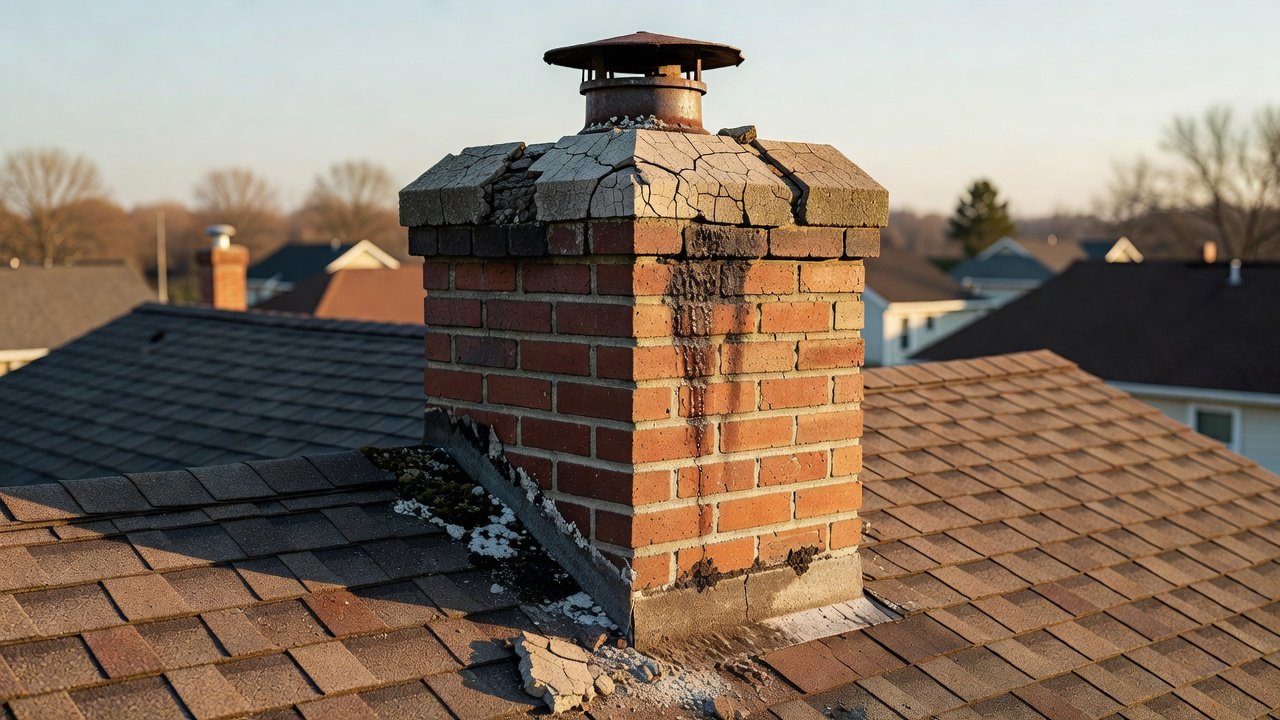
Some chimney problems are not obvious from the firebox. An inspection can identify conditions involving the flue, masonry, chimney cap, damper, or other components that a homeowner may not notice during ordinary fireplace use.
CSIA recommends annual chimney inspections specifically because inspections can reveal hidden problems before they become more serious. (CSIA)
That does not mean every annual inspection requires a camera.
A Level 1 inspection is the basic inspection level when the chimney and venting system can be adequately evaluated under its current conditions. A Level 2 inspection is more extensive and includes additional examination of accessible areas and, where applicable, video scanning of the chimney interior. (CSIA Level 2 guidance)
The important point is that you should not wait for a visible symptom before having the chimney evaluated.
“We Barely Used the Fireplace, So We Can Skip This Year”
Limited use does not automatically eliminate the need for an inspection.
Even a chimney that has not been used heavily can develop problems unrelated to the amount of firewood burned. Animals can enter an uncapped or damaged chimney, debris can accumulate, and exterior masonry can deteriorate.
CSIA specifically recommends annual inspection and notes that chimney inspections can identify animal nests, deterioration, and other conditions even when the fireplace has not been used extensively. (CSIA)
A rarely used chimney may also serve a different appliance. Older homes can have multiple fuel-burning systems connected to chimney or venting systems, so homeowners should not assume that an unused fireplace means the entire chimney system is inactive.
If a gas or oil appliance vents through a chimney, proper venting remains important even if the fireplace itself is never used.
“My Chimney Was Swept Last Year, So It Was Already Inspected”
Cleaning and inspection are related, but they are not identical.
A chimney sweep removes deposits and debris when cleaning is necessary. An inspection evaluates the condition and operation of the chimney and venting system.
CSIA recommends annual inspection, with cleaning performed when necessary. Chemical cleaning products are also not considered a substitute for mechanical cleaning and professional inspection. (CSIA)
A routine cleaning may include an inspection of accessible components, but homeowners should ask exactly what inspection level was performed.
A Level 2 inspection is more comprehensive than a routine Level 1 inspection. It can be appropriate when conditions have changed, when a property is being sold, when a chimney is being relined, after a chimney or building fire, after certain external events, or when an operating malfunction may have caused damage. (CSIA Level 2 guidance)
So if your last service was described only as a “sweep,” ask whether an inspection was also performed and what level it was.
“If There’s No Fire, There’s No Danger”
An unused fireplace does not necessarily mean an unused chimney system.
A chimney can still be exposed to water, animals, debris, masonry deterioration, and other problems while sitting idle.
If a chimney serves a fuel-burning appliance, proper venting remains particularly important. The EPA explains that carbon monoxide can result from fuel-burning appliances and that improperly sized, blocked, disconnected, or leaking flues can contribute to indoor carbon monoxide exposure. (EPA)
CSIA similarly warns that excessive soot, blockages, damaged liners, and other chimney problems can interfere with safe venting and potentially allow combustion gases into the home. (CSIA)
That is why an unused fireplace should not automatically be treated as a completely irrelevant part of the home’s venting system.
If a chimney is no longer being used at all, homeowners should still understand what, if anything, remains connected to it before assuming the system can simply be ignored.
“Any Contractor Can Inspect a Chimney”
Chimney inspection requires knowledge of chimney construction, venting systems, inspection procedures, and applicable safety standards.
That is one reason homeowners may want to consider a recognized credential when choosing a chimney professional.
CSIA certification demonstrates that a professional has passed the organization’s certification examination and has demonstrated knowledge of chimney and venting systems. CSIA also provides a directory for homeowners looking for certified professionals. (CSIA)
Certification is not the only factor to consider.
Ask about experience with your type of chimney and appliance, insurance, the inspection level being performed, and whether the company will provide documentation of its findings.
A good inspection should leave you understanding what was examined and whether any follow-up work is actually necessary.
“Older Lawrence Homes Automatically Need a Camera Inspection”
The age of a home alone does not determine the appropriate inspection level.
A chimney in an older house may certainly deserve closer evaluation, particularly if its construction history is unknown or if the chimney has undergone modifications.
But it would be inaccurate to say that every older Lawrence chimney has an unlined or partially lined flue that can only be discovered with a camera.
The inspection level should be based on the condition and circumstances of the chimney.
For example, CSIA identifies changes to an appliance or fuel type, property sale, relining, chimney or building fires, certain external events, and potentially damaging operating malfunctions as circumstances in which a Level 2 inspection may be appropriate. (CSIA Level 2 guidance)
The right question is not simply, “How old is the house?”
It is, “What needs to be evaluated, and can the current inspection level adequately determine whether the system is serviceable?”
“A Chimney Inspection Has to Be Expensive”
There is no reliable universal price for chimney inspections in Lawrence or Nassau County.
The cost depends on the inspection level, chimney configuration, accessibility, number of flues, connected appliances, and whether additional diagnostic work is necessary.
A Level 1 inspection is different from a Level 2 inspection that requires additional access and interior examination.
If a professional recommends a more extensive inspection, ask why it is necessary and what the additional inspection will evaluate.
For repairs, the same principle applies. A liner replacement, masonry repair, chimney cap replacement, or other corrective work can vary considerably depending on the chimney’s construction and the scope of the problem.
Rather than relying on a generic local price range, ask for an itemized estimate that separates inspection, cleaning, and repairs.
What Should a Proper Chimney Inspection Tell You?
At the end of an inspection, you should have a clearer understanding of the chimney’s condition.
Depending on the inspection level, the professional may evaluate components such as:
- The fireplace or appliance connection
- The visible firebox
- The damper
- Accessible portions of the chimney
- Flue condition
- Chimney exterior
- Crown and cap
- Flashing
- Clearances
- Obstructions
- Signs of deterioration
A Level 2 inspection can provide a more detailed evaluation when circumstances warrant it and includes inspection of additional accessible areas plus examination of the interior of the flue. (CSIA Level 2 guidance)
New York’s current residential code also establishes requirements for masonry chimney construction, including flue sizing and clearances from combustible materials. (New York State Department of State)
When Should Lawrence Homeowners Schedule an Inspection?
The simplest answer is: at least once a year, and sooner when circumstances warrant it.
CSIA follows NFPA 211’s recommendation for annual inspection of chimneys, fireplaces, and vents, with cleaning, maintenance, and repairs performed when necessary. (CSIA)
You should also consider contacting a chimney professional when:
- You are buying or selling a property
- You have changed the appliance or fuel type
- A chimney or building fire has occurred
- You suspect chimney damage
- A chimney has been relined
- You notice smoke entering the home
- Drafting has changed
- An appliance is not venting properly
- You see damaged masonry or flue material
- You suspect an obstruction or animal nest
These circumstances can warrant a more detailed evaluation depending on the situation. (CSIA Level 2 guidance)
Don’t Wait for a Problem to Become Visible
A chimney inspection is not about finding something wrong with every chimney.
It is about determining whether the system is in suitable condition before you rely on it.
For Lawrence homeowners, an annual inspection can provide a useful opportunity to identify deterioration, deposits, obstructions, or venting problems while they are still manageable.
And if the chimney is in good condition, that information is valuable too.
The goal is not to sell unnecessary repairs. It is to know what your chimney actually needs before you light the next fire.
Related from Far Rockaway Chimney: Chimney Repair in Far Rockaway, NY – Restore Safety & Structural I