
Fact-Checked
Source Material Verified
Don’t Ignore What Your Chimney Is Telling You Before Cold Weather Sets In
Most masonry damage doesn’t announce itself dramatically. It appears quietly a line of white staining on the brick, a faint musty smell after rain, or a piece of mortar sitting in the firebox that wasn’t their last season.
In Bayswater, where the coastal air from Jamaica Bay accelerates freeze-thaw cycles and salt-related deterioration, chimneys endure far more stress than similar structures farther inland.
By the time many homeowners in Far Rockaway realize there’s a problem, the repair bill has often grown to several times what it would have been just a few months earlier.
This guide explains the warning signs to watch for, what they typically mean, and when delaying repairs is no longer a safe or cost-effective option.
Why Seasonal Timing Matters More Here Than Almost Anywhere Else
Bayswater sits along the southern edge of Far Rockaway on a narrow peninsula exposed to salt air, coastal humidity, and harsh winter weather.
Those conditions accelerate masonry deterioration through repeated freeze-thaw cycles and salt exposure.
According to NFPA 211, chimneys should be inspected annually because even minor defects worsen over time. A repair that costs a few hundred dollars in early fall can become a much larger project after an entire winter of water infiltration and freeze-thaw expansion.
The ideal time to schedule chimney masonry repairs in Far Rockaway is between August and October.
Mortar, masonry repair products, and repointing materials cure best when temperatures remain above 40°F.
Once nighttime temperatures consistently fall below that range, proper curing becomes more difficult, and contractors may recommend postponing repairs until spring.
Waiting too long can leave your chimney exposed throughout the entire heating season.
Warning Signs That Mean It’s Time to Call a Professional
White Staining on the Brick (Efflorescence)
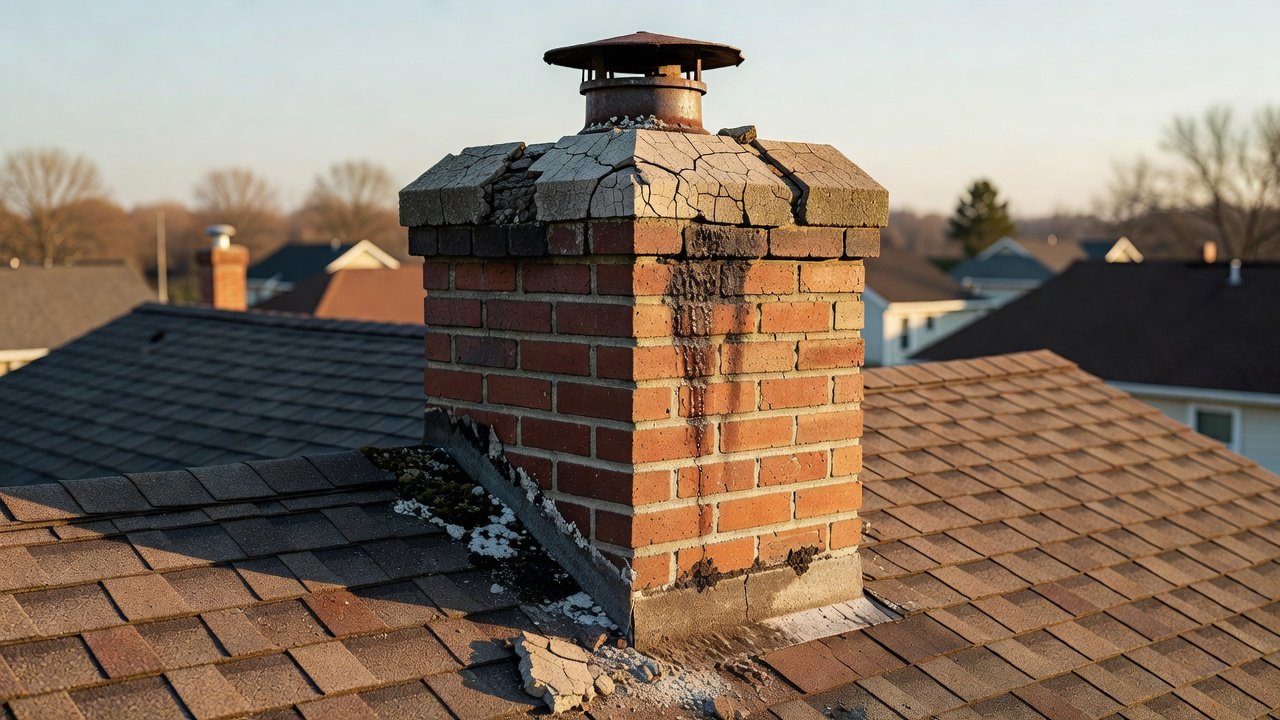
That chalky white residue on the outside of your chimney is known as efflorescence.
It’s created when water travels through masonry, carrying dissolved mineral salts to the surface.
Efflorescence doesn’t cause damage by itself, but it confirms that moisture is already entering the chimney.
In Bayswater’s coastal environment, where salt exposure already accelerates deterioration, this warning sign deserves attention.
If efflorescence appears alongside any of the issues below, schedule an inspection as soon as possible.
Mortar Joints That Are Crumbling or Receding
Inspect the mortar joints between the bricks.
If they’re noticeably recessed, soft, crumbling, or missing in sections, water has an easy path into the chimney.
As temperatures drop, that trapped moisture freezes, expands, and widens the damage.
This isn’t something to monitor indefinitely.
Repointing should be completed before winter whenever possible.
Spalling Bricks
Finding flakes or chunks of brick on your roof, in your gutters, or around your home is a sign of spalling.
Spalling occurs when moisture trapped inside the brick freezes and forces the outer surface to break away.
Once it begins, the deterioration often accelerates rapidly if left through another winter.
Professional repairs are recommended before the damage spreads further into the chimney structure.
Cracks in the Chimney Crown
The chimney crown is the concrete surface that seals the top of the chimney around the flue liner.
Even small hairline cracks allow water to penetrate the chimney system.
In Far Rockaway’s freeze-thaw climate, those tiny cracks can quickly expand into major fractures.
Because the chimney crown protects nearly every component below it, prompt repairs can prevent much more extensive masonry damage.
Rust Inside the Firebox or on the Damper
Rust is a strong indicator that moisture has entered the chimney.
Light surface rust on a fireplace that hasn’t been used recently may not require immediate attention.
However, rust stains running down the firebox walls or a damper that sticks or no longer operates properly usually indicate ongoing water intrusion.
If rust appears extensive or affects the operation of the damper, schedule an inspection.
Persistent Musty Odors After Rain
A damp or musty smell coming from the fireplace after rainfall often signals moisture trapped somewhere inside the chimney system.
Many homeowners notice this long before visible damage appears.
If the odor has become stronger or occurs after every rainfall, it’s worth having the chimney professionally evaluated.
Gaps Between the Chimney and Roof
Take a look at the area where your chimney meets the roof.
If the flashing appears lifted, separated, or damaged or if you can see visible gaps water is likely entering at that joint.
Both the flashing and surrounding masonry should be evaluated together since they function as one waterproofing system.
A Leaning Chimney
Although uncommon, older homes in Far Rockaway occasionally experience chimney movement as foundations settle over time.
If your chimney appears to lean noticeably when viewed from outside, treat it as a structural concern rather than a routine maintenance issue.
Contact a qualified chimney professional immediately.
What the Repair Process Looks Like
A qualified masonry contractor typically begins with a thorough exterior inspection of the chimney, including the brickwork, mortar joints, flashing, and crown.
A CSIA-certified chimney technician may also perform a camera inspection of the flue to determine whether moisture has damaged the chimney liner or smoke chamber.
Once the inspection is complete, the necessary repairs become much clearer.
Depending on the condition of the chimney, the work may include:
- Masonry repointing
- Chimney crown repair or replacement
- Brick replacement for spalling areas
- Professional waterproofing
- Flashing repairs
- A combination of the above
Throughout Bayswater and Far Rockaway, repointing a standard single-flue chimney typically ranges from $500 to $1,500, depending on chimney height and the extent of deterioration.
Chimney crown replacement generally costs between $300 and $800.
More extensive brick replacement or structural masonry repairs often begin around $1,500 and increase based on the scope of work.
Delaying repairs until after winter frequently increases costs because additional freeze-thaw damage expands the project.
Don’t Let Another Winter Make the Decision for You
Many homeowners who call in early spring discover that the damage they first noticed in the fall has become far more expensive to repair.
That’s simply the reality of Bayswater’s coastal climate.
Salt exposure, moisture, and freezing temperatures are especially hard on masonry, making routine maintenance even more important than it is in many other parts of the region.
If you’ve noticed any of these warning signs or if it’s been more than a year since your chimney was professionally inspected now is the right time to act.
Ridgewood Chimney proudly serves homeowners throughout Bayswater, Far Rockaway, and surrounding Queens communities.
Schedule your free chimney inspection today. We’ll assess your chimney, explain exactly what we find, and recommend only the repairs your home truly needs before another winter have the chance to make the damage worse.
Related reading
James Whitfield, CSIA Certified Chimney Sweep
Senior Sweep Technician
CSIA-certified with over a decade of professional chimney and fireplace service.